Listen to this content

As GNSS interference becomes more common and sophisticated across defense and mission-critical operations, resilient systems are now a core design priority.
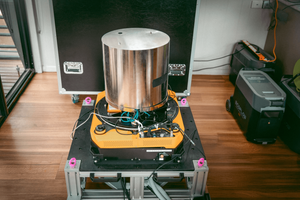
At Jammertest in Andøya, Norway, industry participants evaluated how GNSS technologies perform under realistic interference conditions designed to replicate operational challenges faced in the field. Among them was Septentrio, which used the event to assess resilience strategies, explore emerging threat scenarios and showcase its latest advancements in anti-jamming and anti-spoofing technology.
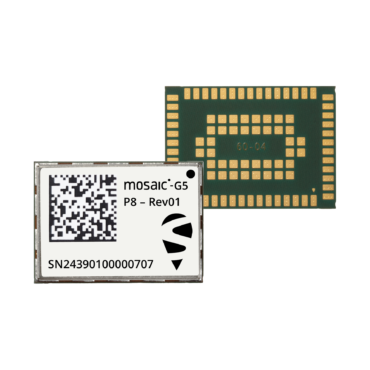
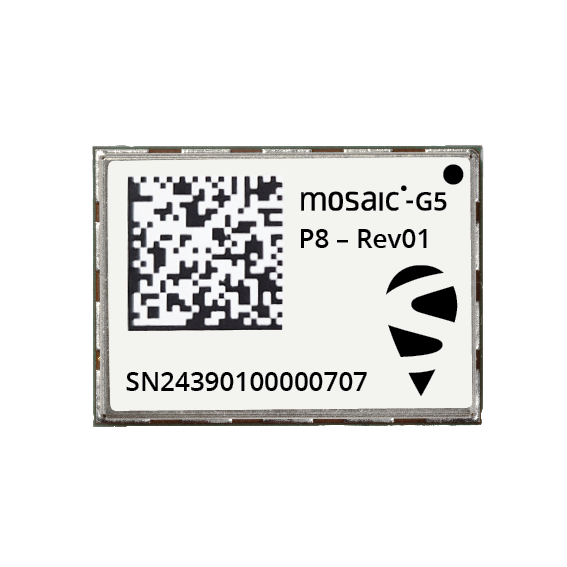
GPS World spoke with Septentrio product manager, Yasmine Hunter, about Jammertest, the growing complexity of GNSS-denied environments and the company’s newly introduced mosaic-G5 P8 receiver designed for SWaP-sensitive, mission-critical applications operating in contested environments.
Jammertest and Real-World Scenarios
How realistic are the Jammertest scenarios, and how closely do they reflect real-world GNSS interference challenges?
I would say quite realistic. One of the strengths of Jammertest is that participants can actively propose scenarios based on what we have encountered in the field, and organizers are often able to adapt to those. For us, this means providing feedback on settings/scenarios that we have seen with our customers.
In addition, it offers participants the opportunity to test the equipment under real environmental conditions. Propagation conditions, terrain, platform dynamics, and antenna behavior (including multipath) all play major roles. These factors significantly influence GNSS performance and are very difficult to fully replicate in a laboratory, so testing them in an operational environment adds a lot of value.
To what extent do these scenarios mirror conditions in conflict zones (e.g., the Middle East or Ukraine)?
In my view, it’s very difficult to fully replicate a conflict‑zone environment, even in a remote location like Andøya. Conflict zones involve a unique combination of sustained, coordinated interference, evolving tactics, and operational pressure that is hard to mirror exactly.
Jammertest allows us to explore individual elements of those environments in a controlled and repeatable way and bridges lab and real‑world deployment by exposing systems to realistic threat profiles without the unpredictability and risk of an active conflict zone.
What are the biggest takeaways from Jammertest?
One clear takeaway is that jamming and spoofing scenarios are becoming more complex and sophisticated every year. It’s increasingly challenging as GNSS manufacturers to address these threats in isolation and still ensure robust operation across real-world use-cases.
Which brings me to the second point; resilience is not only about maintaining position availability. Situational awareness – understanding what the receiver is experiencing and why – becomes increasingly critical. Knowing when GNSS can be trusted, and when it cannot, is just as important as maintaining a solution.
What does Septentrio do differently from competitors when it comes to mitigating jamming and spoofing?
Septentrio has been working on jamming and spoofing mitigation for a long time, and that experience is built on extensive real‑world use cases rather than purely theoretical approaches.
This means that our receivers have been designed to be resilient, not just at the signal processing level, but also in how they disseminate this information to users. From my application‑engineering background, I’ve seen that these two aspects are equally important: strong mitigation technologies and clear insight into what is happening so users can make informed decisions.
What are some of the most significant engineering or design challenges in developing resilient GNSS solutions?
A key challenge is balancing performance, robustness, and usability. Advanced mitigation techniques often come with trade‑offs in complexity, power consumption, or cost. As we are targeting increasingly SWaP‑sensitive applications with our latest modules, this balance becomes especially critical and requires careful design decisions from the outset.
From a usability perspective, it’s not just about rejecting interference or spoofing, but also doing so in a way that preserves continuity and transparency (or trust) in the solution that we provide.
How is your approach evolving as interference becomes more sophisticated?
We increasingly accept that GNSS will rarely operate alone in challenging environments. The focus is shifting toward deeper integration with complementary sensors and systems.
From our side, that means ensuring the GNSS receiver provides reliable, high‑quality information — not just position — but also integrity metrics and interference indicators (like our jamming and spoofing flags) that other systems can use effectively. Understanding how GNSS fits into a broader navigation or mission architecture is becoming essential.
Upcoming Product Releases in the Defense Market
Can you provide an overview of the new product and the specific problem it is designed to solve?
The mosaic-G5 P8 introduces what we call “ultimate resilience”. It is targeted to mission-critical applications where optimizing not only availability, but also the integrity of the solution is the main goal.
The product directly addresses environments where GNSS interference is not occasional but expected — and where incorrect positioning data can be more dangerous than no data at all.
What are the key technical specifications or innovations that set this product apart?
It has the highest level of jamming rejection and combined with more advanced spoofing mitigation capabilities. In addition, the mosaic-G5 P8 provides access to synchronized baseband samples and jamming-power indicators. These outputs enable advanced use cases such as jammer detection and localization.
How does this solution improve performance in contested or denied environments?
It improves both availability and integrity. The receiver is designed to maintain a usable solution for as long as possible, while also clearly indicating when conditions degrade. This allows operators or higher‑level systems to react appropriately.
What types of platforms or use cases is this product best suited for (e.g., UAVs, ground vehicles, naval, etc.)?
We are primarily targeting SWaP‑sensitive, mission‑critical platforms. So far, we’ve seen strong adoption (of our other products) in highly mobile applications such as UAVs and USVs, but we see clear potential across a broader range of platforms, including ground and (other) maritime systems.
How does it integrate with existing systems or architectures?
The receiver is designed to integrate seamlessly into existing architectures through standard interfaces, while also offering advanced outputs for customers who want deeper system‑level integration. This flexibility allows it to serve both as a drop‑in GNSS solution and as an active sensor within a larger resilience framework.
How does this launch reflect broader trends or priorities in the defense GNSS market?
It reflects a clear shift toward resilience, integrity, and transparency rather than pure accuracy. Defense users increasingly recognize that GNSS denial is not an edge case, but a baseline assumption. Solutions must therefore be designed to operate, inform, and adapt under persistent interference and spoofing.
Looking Ahead
What should defense and industry stakeholders be preparing for now?
They should be preparing for a reality in which GNSS interference is persistent, adaptive, and increasingly deliberate—not an exception, but an operating condition.
This is also an aspect we are actively considering with solutions like the mosaic‑G5 P8. Rather than treating resilience as a theoretical requirement or a nice add-on, we’re designing for operational use cases where integrity, interference awareness, and transparent behavior under stress are essential.
For stakeholders, this means thinking beyond standalone receivers and focusing on system‑level architectures: how GNSS integrates with other sensors, how integrity information is consumed, and how platforms respond when GNSS performance degrades.