Listen to this content
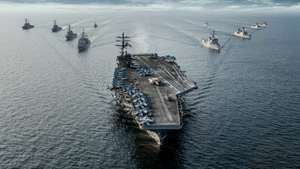
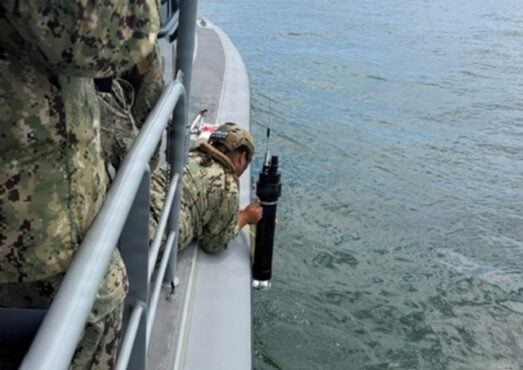
The Army, Navy and Space Force used Project Convergence Capstone 6 to experiment with a counter-PNT electronic warfare platform known as Hammer of the Gods, including the system’s first-ever maritime test in mid-July 2026.
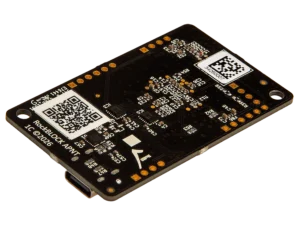
Hammer of the Gods is an emitter designed to deliver an expanded suite of command-and-control and operational capabilities from a highly deployable, low-electromagnetic-signature platform, providing multi-domain effects at the forward edge of operations. Land-based versions have appeared in exercises and demonstrations over the past two years; the maritime variant made its operational debut during PC-C6 off the coast of southern California.
The experiment was conducted with support from U.S. Space Forces Pacific and Naval Base San Diego and was designed to address learning objectives from the U.S. Army Space and Missile Defense Command and U.S. Space Forces Pacific.
“Joint experimentation is how we prepare for future fights,” said Lt. Col. Darrin Hall, chief of modeling, simulation and integration for U.S. Space Forces Pacific. “By integrating space, cyber and conventional forces into realistic scenarios, we strengthen our ability to operate as one joint team in contested environments.”
A central focus of the experiment was PNT — the positioning, navigation and timing capability that underpins navigation, communications synchronization, precision-guided munitions and uncrewed platforms across nearly every domain of modern combat.
“PNT is the foundation of modern military operations,” Hall said. “Counter-PNT effects enhance lethality by impacting the backbone for pinpoint targeting via long-range artillery, guided missiles and cruise munitions. Without PNT data, modern weapon precision drops sharply, resulting in delayed missions, missed objectives or severe collateral damage.”
Recent conflicts have underscored how dependent military forces have become on GPS and other PNT services, and how disruptions to those services can ripple across communications, navigation and overall mission effectiveness. PC-C6 gave commanders an opportunity to study those vulnerabilities in realistic operational settings and develop concepts for operating in degraded or denied PNT environments.
“This experiment proved that counter-PNT capabilities can be deployed, controlled and recovered in real-world maritime operations while extending operational reach through resilient mesh networking,” Hall said. “It demonstrates the value of joint collaboration in advancing operational readiness.”
PC-C6 serves as a venue for Army, joint, and multinational partners to integrate and experiment with future warfighting capabilities.