Listen to this content
For more than a decade, the defense industry has measured GNSS resilience using a straightforward benchmark: Can a platform maintain positioning and navigation under jamming? As electronic warfare becomes routine in modern conflicts, that benchmark is no longer enough.
Autonomous platforms are now expected to operate where degraded, denied, or manipulated GNSS is not an exception, but an operational reality. The question is therefore shifting from whether a navigation signal can be protected to how much operational capability remains when interference intensifies, or GNSS becomes unavailable.
This shift is reshaping system design and procurement priorities. Protected GNSS, inertial navigation, alternative sensors, and intelligent software are increasingly treated as complementary layers rather than competing approaches. Their value lies not only in the performance of each technology, but in the platform’s ability to transition between them without interrupting the mission.
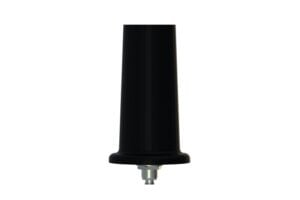
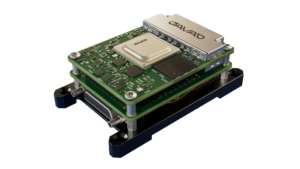
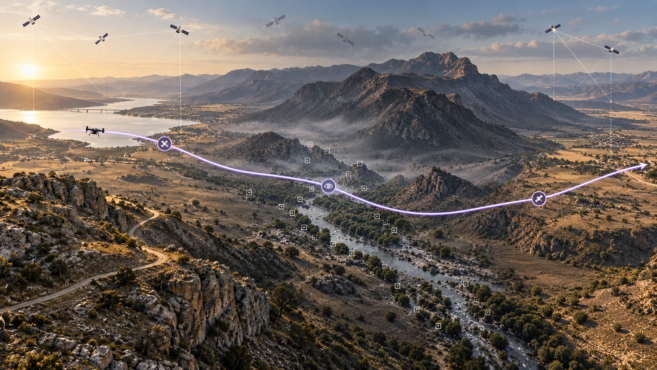
A recent flight test conducted with a strategic global customer demonstrated this approach using the IroNav integrated navigation system on a drone operating under continuous GNSS jamming. The system combines infiniDome’s dual-band SunStone anti-jamming solution with Wonder Robotics optical navigation technology. Its primary mode uses protected GNSS; when interference or spoofing prevents reliable satellite-based navigation, it automatically transitions to optical navigation.
An unprotected receiver could not obtain a position fix in the test area. The protected UAV nevertheless took off and climbed to 100 meters while tracking 29 to 32 satellites, then followed its planned route toward a waypoint 870 meters from takeoff. As interference intensified to approximately -65 dBm, the satellite count fell to five or six, and reliable GNSS navigation could no longer be maintained. IroNav automatically transitioned to optical navigation and continued the mission. After approximately 1,200 meters of flight, interference decreased; the protected receiver recovered 15 to 22 satellites, and the system returned to GNSS navigation. The position difference at the transition was approximately 10 meters, which the UAV corrected as it returned to its planned route.
The test illustrates the operational value of layered resilience. Anti-jamming protection preserved GNSS navigation for as long as conditions allowed; optical navigation maintained continuity through the most severe interference; and automatic recovery returned the drone to satellite-based navigation when conditions improved. The result was not simply a receiver remaining available under jamming, but an aircraft continuing to navigate and execute its route as the environment changed.
As autonomy becomes more central to military operations, resilience will increasingly be measured by operational outcomes rather than a single specification.
At AUSA 2026, infiniDome will present this broader approach to navigation resilience and mission continuity for autonomous and crewed platforms operating in contested environments.