Listen to this content
Autonomy has moved decisively beyond experimentation into execution. Across construction, agriculture, infrastructure and emerging urban mobility, the question is no longer whether machines can operate autonomously but how reliably, how efficiently and at what scale.
As these sectors change and needs evolve, there is an underlying truth: autonomy is only as capable as its foundation.
Traditional GNSS, which delivers meter-level accuracy, was sufficient for navigation. However, when machines are tasked with grading a surface, planting crops in precise rows or mapping critical infrastructure, meter-level deviation is no longer acceptable. Autonomy demands predictability and repeatability. The difference between meters and centimeters is the difference between guidance and execution.
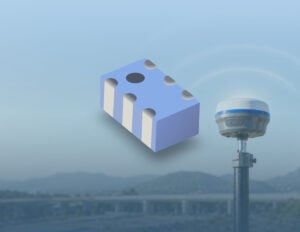
This is where high-precision GNSS, enabled by correction services and reference networks, such as Topnet by Topcon, becomes critical. By comparing satellite signals with known ground positions and delivering real-time corrections, these systems reduce positioning errors down to the centimeter level. This transformation turns positioning into a reliable, real-time control input rather than a passive reference.
Where precision matters most
Not all autonomy challenges are created equal. A clear dividing line exists between relative and absolute positioning problems, and this distinction defines where high-precision GNSS delivers the most value.
On-road autonomy is largely a relative challenge. Vehicles must constantly interpret dynamic surroundings, identifying other vehicles, pedestrians and obstacles. In this environment, sensor fusion technologies such as lidar, radar and vision systems dominate because context matters more than fixed geographic accuracy.
Off-road environments tell a different story. Construction sites, farms and managed landscapes demand absolute positioning. Machines must follow predefined paths, interact with fixed infrastructure and deliver repeatable outcomes. In these contexts, centimeter-level accuracy is not optional; it is mission critical.
This is why precision GNSS has long been embedded in earthmoving, paving, grading and precision agriculture. It is also why adoption is accelerating in emerging applications such as robotic turf management and small autonomous equipment fleets. What unites these use cases is the requirement for spatial certainty tied directly to the physical world.
Scaling autonomy changes the economics
The most important shift in autonomy today is not just technological but economic. High-precision positioning is moving from specialized, high-value equipment into high-volume autonomous systems.
Robotic lawnmowers are a leading indicator. Once dependent on boundary wires, they are now leveraging GNSS-based positioning to operate more flexibly and at scale. Tens of thousands of units have already been deployed, signaling how quickly precision can move into mainstream applications when cost, performance, and usability align.
At the same time, industries are rethinking how work is performed. Instead of relying on a single large machine, operators are beginning to deploy multiple smaller, electrified units that can operate autonomously. This shift introduces flexibility and efficiency, allowing work to be scaled in new, more flexible ways.
A critical opportunity is also emerging around data capture. Many industries still lack accurate records of physical assets, particularly below ground. By embedding positioning into everyday workflows, organizations can continuously build a reliable digital representation of their environments. For example, in utility mapping, when crews dig trenches to install junction boxes and connect homes, lower-skilled operators can now capture precise location data of buried cables as they work, creating a lasting record that can later be used for maintenance, service calls, or repairs. This turns autonomy into not just an operational tool, but a mechanism for long-term insight and efficiency.
Positioning plays a central role in making this viable, but it also introduces new economic considerations. In high-value applications, the return on investment is clear and immediate. In high-volume markets, positioning costs are embedded within the cost of the solution, but for both, the common thread is that precision must deliver measurable value, whether through productivity gains or entirely new operating models.
Meeting operational mandates
One of the most significant accelerators of high-precision adoption is the shift from optional capability to mandated requirements. As autonomy expands into shared and regulated environments, accuracy becomes a matter of compliance as much as performance.
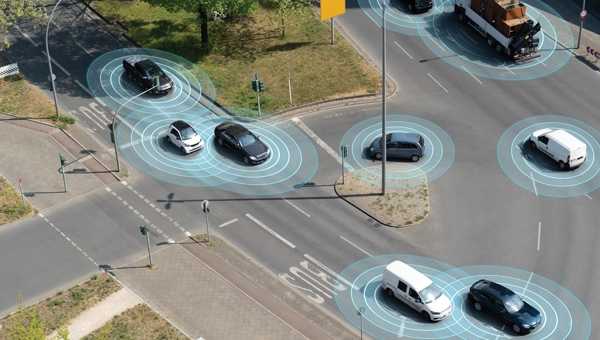
More broadly, as the number of autonomous and semi-autonomous systems increases, the need to structure and constrain their movement will grow. This is particularly true in urban and suburban environments, where density and interaction create complexity. Precision positioning means these zones of allowance can be carefully defined and followed, controlling workflows and creating safer interactions between machines and people.
Precision as the foundation for autonomy
Autonomy is often framed through the lens of artificial intelligence or robotics, but in practice, it is grounded in something more fundamental: the ability to know exactly where something is, at all times.
Without reliable, high-accuracy positioning, autonomous systems cannot deliver consistent or scalable performance. This means that as adoption accelerates, centimeter-level accuracy will become a non-negotiable demand. And with this, industries can move beyond incremental efficiency gains toward fully automated ecosystems that consistently deliver maximum results.