Listen to this content
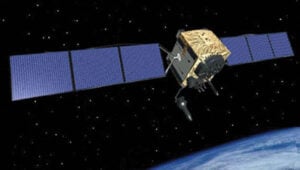
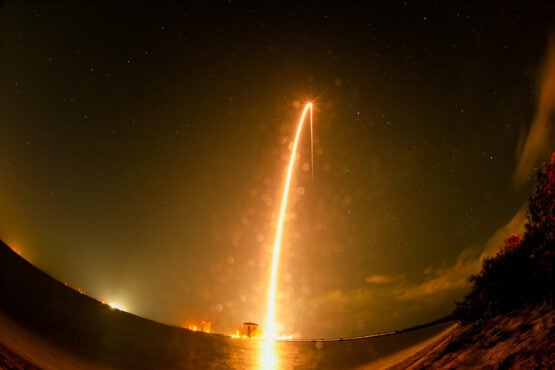
The U.S. Space Force and Lockheed Martin launched the GPS III Space Vehicle 10 (SV10) on April 21, marking the final satellite in the GPS III series and bringing the GPS constellation to its largest size to date.
Signal acquisition was achieved shortly after launch. The spacecraft is being managed at Lockheed Martin’s Denver-based launch and checkout operations center while it undergoes initial testing before integration into the operational network.
SV10 includes enhancements designed to improve the accuracy and resiliency of the constellation. Among its payloads is an optical crosslink demonstration designed to test direct satellite-to-satellite communication in orbit, a capability intended to strengthen system robustness.
The launch represents the fourth consecutive GPS mission conducted on an accelerated schedule.
GPS III satellites provide improved performance over earlier generations, including increased positioning accuracy, stronger resistance to jamming, and the addition of secure M-code signals for military users. The constellation supports positioning, navigation and timing (PNT) services for military, civil and commercial applications worldwide.
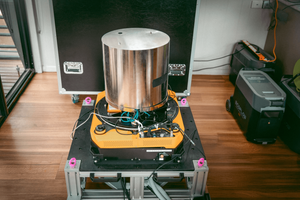
SV10 also carries a demonstration digital rubidium atomic frequency standard, an advanced clock designed to improve onboard timekeeping precision.
The deployment of SV10 concludes the GPS III series and precedes the next-generation GPS IIIF satellites. The upcoming series is expected to introduce additional capabilities, including enhanced anti-jamming features such as Regional Military Protection.
More than 30 GPS satellites are currently in orbit, providing global PNT services to billions of users across defense, infrastructure and commercial sectors.