No audio available for this content.
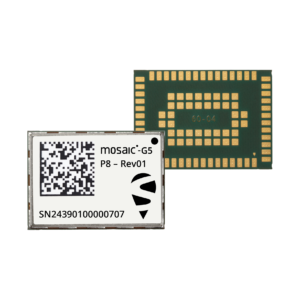
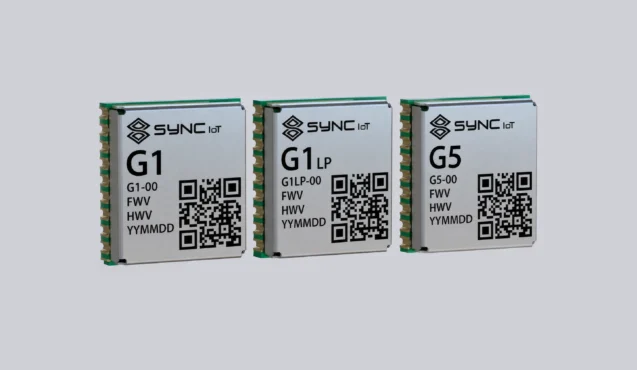
SyncIoT, a division of SyncWise Inc., has introduced its G1 and G5 families of GNSS receiver modules for applications in the Internet of Things (IoT), defense and critical infrastructure sectors.
According to the company, the modules are designed and manufactured outside China and contain no Chinese hardware or software components. The products are intended for organizations seeking secure supply chains and compliance with U.S. procurement requirements, including those related to the National Defense Authorization Act (NDAA).
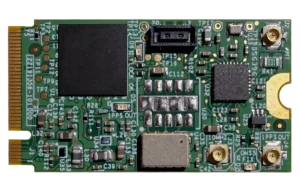
The G1 family is designed for applications requiring a balance of positioning performance, power consumption and cost. The L1 receivers support concurrent tracking of up to four GNSS constellations, enabling access to more satellites and improving positioning availability in challenging environments. A low-power version, the G1LP, is aimed at battery-powered applications.
The G5 module supports both L1 and L5 GNSS signals and is designed for higher-precision positioning applications. SyncIoT said the module can provide sub-meter accuracy while tracking up to four satellite constellations simultaneously. The use of L5 signals can help mitigate multipath effects, which can degrade positioning accuracy in urban and other signal-challenged environments.
Additional features of the G5 include raw carrier-phase measurements, a one-pulse-per-second (1PPS) timing output, anti-jamming and anti-spoofing capabilities, inertial measurement unit (IMU) data pass-through and an integrated surface acoustic wave (SAW) filter and low-noise amplifier (LNA).
“The release of the G1 and G5 families was initiated at the request of our top customers, who require U.S.-based solutions and greater security across their supply chains,” said Mark Murray, Head of IoT Modules at SyncWise. “The G1 and G5 families are only the beginning. Stay tuned for announcements regarding future products and partnerships.”
Samples and development kits for both product families are currently available here.